Navigating the Complexities: A Comprehensive Double Taxation Guide for US Expats in the UK

Introduction to Transatlantic Taxation
For United States citizens, the dream of living and working in the United Kingdom is often accompanied by a complex and daunting reality: the US tax system. Unlike almost every other nation, the United States employs a citizenship-based taxation model. This means that as long as you hold a US passport or a Green Card, the Internal Revenue Service (IRS) asserts its right to tax your global income, regardless of where you reside. When you pair this with the UK’s residence-based system—where Her Majesty’s Revenue and Customs (HMRC) taxes residents on their worldwide earnings—the risk of being taxed twice on the same pound or dollar is significant.
Understanding the mechanisms designed to prevent this ‘double taxation’ is essential for any American expatriate. This guide explores the legal frameworks, tax treaties, and specific exclusions available to ensure your financial transition to the UK remains efficient and compliant.

The Legal Foundation: The US-UK Tax Treaty
The primary shield against double taxation is the Convention between the Government of the United States of America and the Government of the United Kingdom of Great Britain and Northern Ireland for the Avoidance of Double Taxation. Established to promote cross-border trade and investment, this treaty provides specific rules for determining which country has the primary taxing rights over various types of income.
Under the treaty, income is categorized into different streams, such as dividends, interest, royalties, and employment income. For most expats, the ‘tie-breaker’ rules help determine residency status if an individual is considered a resident in both jurisdictions. However, the US includes a ‘Saving Clause’ in most of its treaties, which preserves its right to tax its citizens as if the treaty did not exist. Therefore, while the treaty is a vital tool for preventing specific overlaps, expats must still rely on internal IRS mechanisms to zero out their US liability.

Mechanism 1: The Foreign Earned Income Exclusion (FEIE)
One of the most common methods used by US expats to reduce their US tax burden is the Foreign Earned Income Exclusion (FEIE), managed via IRS Form 2555. For the 2023 and 2024 tax years, the IRS allows eligible individuals to exclude a significant portion of their foreign-earned wages or professional fees from their US taxable income.
To qualify for the FEIE, you must meet one of two tests:
1. The Physical Presence Test: You must be physically present in a foreign country for at least 330 full days during any period of 12 consecutive months.
2. The Bona Fide Residence Test: You must be a resident of a foreign country for an uninterrupted period that includes an entire tax year.
It is important to note that the FEIE only applies to ‘earned income’—salary, wages, and professional fees. It does not apply to passive income such as dividends, capital gains, or rental income from properties.
Mechanism 2: The Foreign Tax Credit (FTC)
For many expats in the UK, the Foreign Tax Credit (FTC), filed via Form 1116, is often a more advantageous strategy than the FEIE. Since the UK generally has higher income tax rates than the US, you can claim a dollar-for-dollar credit for the taxes you pay to HMRC against your US tax liability.
If you pay £30,000 in tax to the UK and your US tax bill on that same income would have been $25,000, you can use the UK tax paid to reduce your US bill to zero. Furthermore, the excess credits can often be carried back one year or forward for up to ten years. This is particularly useful for expats who have significant passive income or who earn more than the FEIE threshold.
The Challenge of Mismatched Tax Years
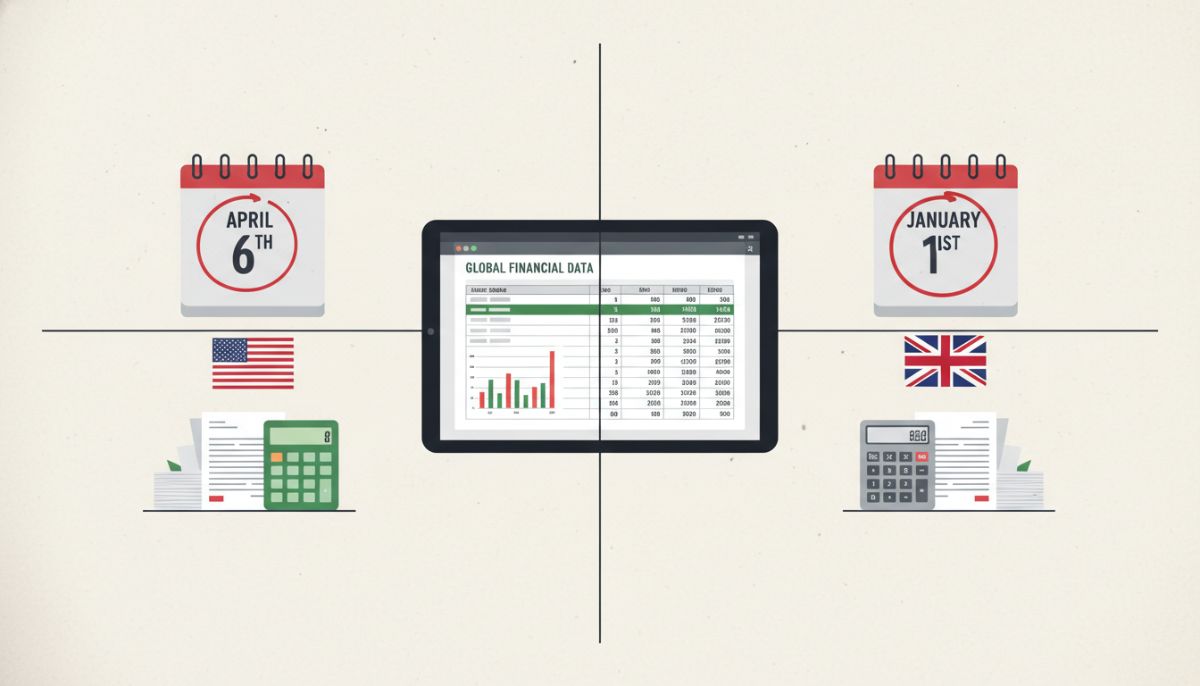
A significant logistical hurdle for US expats in the UK is the discrepancy between the two countries’ tax calendars. The US tax year follows the calendar year (January 1 to December 31). In contrast, the UK tax year runs from April 6 to April 5 of the following year. This misalignment requires careful record-keeping and often necessitates the use of ‘pro-rating’ techniques to accurately report income and taxes paid on the respective returns.
Social Security and the Totalization Agreement
Beyond income tax, expats must also consider social security contributions. Normally, an individual working abroad might be subject to both US Social Security taxes and UK National Insurance contributions. To prevent this, the US and UK have a ‘Totalization Agreement.’ This agreement ensures that you only pay into one system at a time. Generally, if you are employed by a UK company, you will pay National Insurance and be exempt from US Social Security taxes, provided you obtain a certificate of coverage.
Reporting Requirements: FBAR and FATCA
Double taxation is not the only concern; disclosure is equally critical. The US government requires expats to report foreign financial assets to prevent tax evasion.
FinCEN Form 114 (FBAR)
If the aggregate value of all your foreign financial accounts (including bank accounts, pension schemes, and investment accounts) exceeds $10,000 at any point during the calendar year, you must file an FBAR. Penalties for non-compliance can be draconian, even for non-willful errors.
FATCA (Form 8938)
Under the Foreign Account Tax Compliance Act (FATCA), taxpayers with specified foreign financial assets exceeding certain thresholds (starting at $200,000 for expats living abroad) must file Form 8938 with their annual return. This is in addition to the FBAR requirement.
Conclusion: Seeking Professional Guidance
Living as a US expat in the UK offers incredible opportunities, but the tax landscape is fraught with pitfalls. From navigating the ‘Savings Clause’ in the tax treaty to choosing between the FEIE and FTC, the decisions you make can have profound impacts on your long-term wealth.
Because every individual’s financial situation is unique—incorporating elements like UK ISA accounts (which are not tax-free in the US) or UK pensions—it is highly recommended to consult with a tax professional specializing in US-UK cross-border taxation. Proper planning ensures that you remain compliant with both the IRS and HMRC while minimizing your global tax liability, allowing you to focus on your life in the United Kingdom rather than your paperwork.